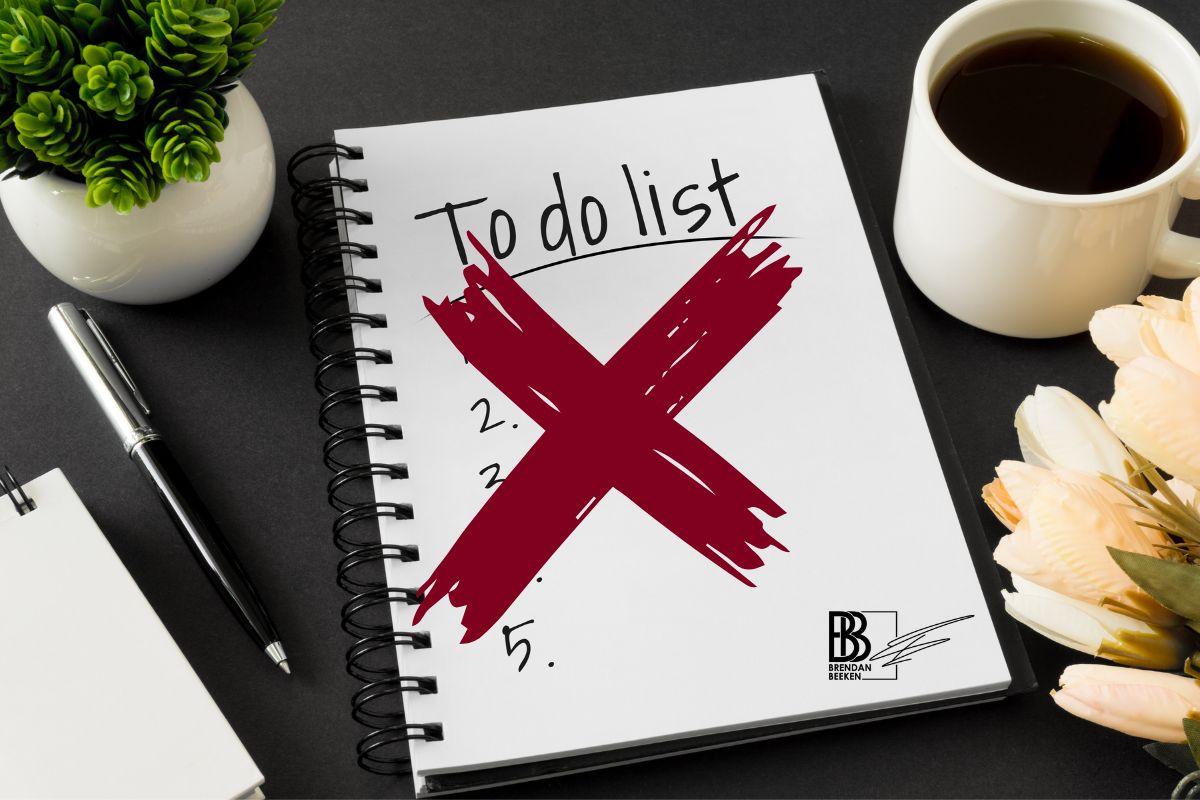
The to-do list makes you feel like you are getting things done. But are you actually achieving anything?
It takes time and effort to prepare the to-do list every day. It should give you goals to focus on, but instead gives you something else to worry about. The ‘to-do’ topics are often short-term, non-strategic objectives.
There is a more effective way to manage your time while ensuring you focus on your aims and achieving your goals.
What Replaces the To-Do List?
Integrating a strategic action plan into your daily schedule is a better approach.
Think beyond what you need to do and focus on what motivates you. Consider your wants and needs; give clarity to your ideas.
Unlike the daily to-do list, this is about putting together a plan that takes in the bigger picture and reflects what energises you, so you are fully motivated to chase your goals.
Instead of a rushed daily list of tasks to tick off, frame your objectives in terms of why you want them, not just what they are. Purpose is a great motivator.
This is sometimes known as an RPM plan, which can stand for “results, purpose, massive action” or “rapid planning method”.
And it applies to your personal life as well as your professional career.
Make Motivation King
I’m going to outline four simple steps to developing, integrating, and realising your RPM plan.
Make
To create your plan, you need to ask, and answer truthfully, three questions:
- What Do I Want?
- Why Do I Want it?
- What Must I Do to Achieve It?
Honest answers to these searching questions will give you the foundation structure of your plan and a clearer path to success.
Devote
There’s no point in having a strategy unless you commit to it. So, once you have made your RPM plan, work out what needs to be done and when it needs to be done. No matter what happens, you must stick to the plan and ensure your schedule reflects the action points.
It is easier said than done, but you have got to block out the noise. Eliminate the pointless distractions that contribute nothing towards your march towards achieving your goals.
When we are all so busy, with new headaches and challenges popping up every day, this is a tough ask. But every distraction is another step further away from your objectives.
Whatever you are dealing with, ask:
- Is this essential?
- Is this getting me where I want to be?
- Can this be delegated?
Remain fully committed to your RPM plan.
Achieve
With your plan defined and the external noise reduced – and, hopefully, the to-do list in the bin! – it’s time to accomplish your objectives.
As you will have realised, the first two points cover the R and the P of RPM – defining your results and committing to your purpose. Now it is time for the M – massive action. This is where you undertake the activity needed to reach your goals.
Because we have dispensed with the distracting, daily ‘to-do’ tasks, these actions will be, as the name says, massive.
It is important to have a method of measuring your progress and keeping track of where you are. I know that sounds like the to-do list has re-appeared, but this is a bigger-picture strategy, not a daily checkbox list.
Say Well Done
After following these steps, you will have greater clarity about where you want to go, why you want to get there, and how you will do it. You will manage your time better by removing distractions and fully focusing on meaningful objectives.
That’s great, but don’t forget to congratulate yourself. Whenever a significant milestone is reached, either on the path to your goal or at the destination, you must celebrate what you have achieved.
We all celebrate differently – a meal with family or friends, binging a guilty pleasure TV show, finally watching that movie they’re all talking about. However you do it, ensure you make time to pat yourself on the back for the dedication and work you have put into your RPM plan.
The To-Do List is History
The most successful people do not spend time scribbling out a to-do list to tackle today’s problems.
They make an informed, actionable strategy, commit to it, and achieve their life objectives. Knowing what you want, why, and how to get there not only gives you control of managing your time – it also gives you command of your own happiness.
Put the to-do list in the bin!