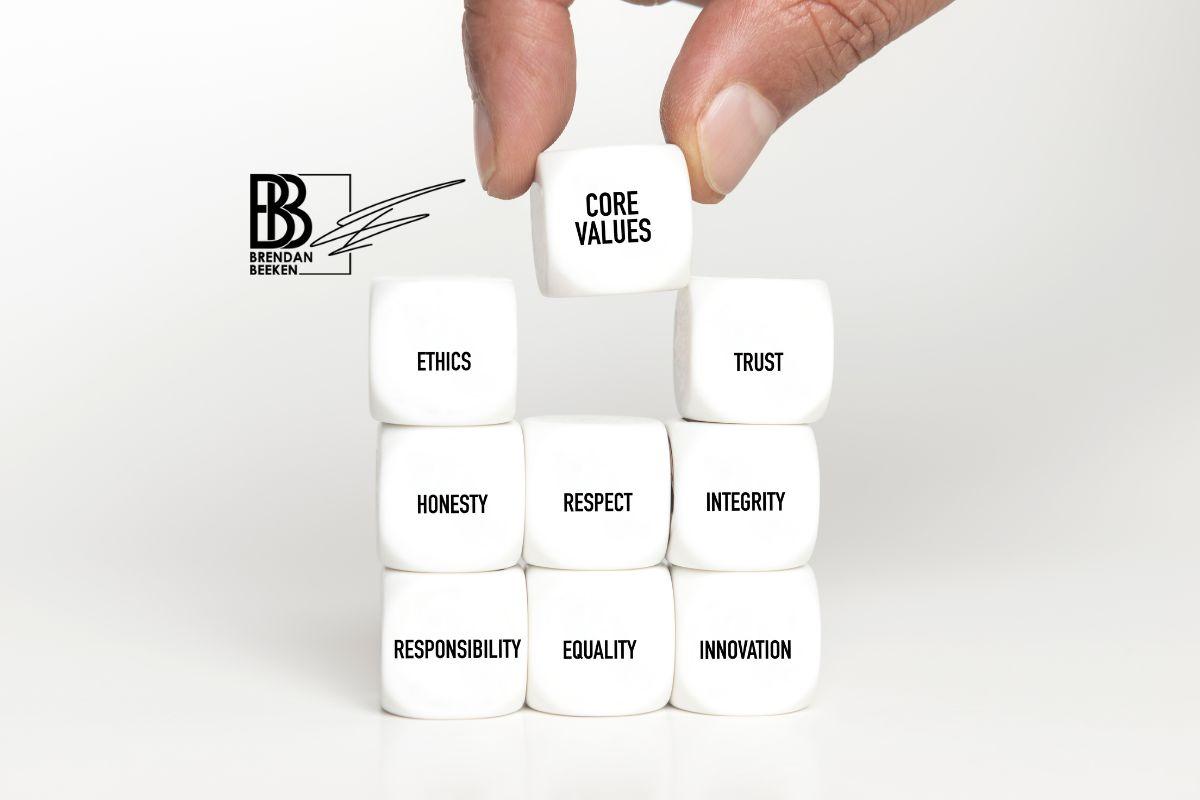
Have you ever considered what your personal values are?
You may wonder why it matters, particularly in a professional context, but values are important, especially in business.
In this article, I’m going to challenge you to ask, ‘what are your personal values’ and explain why I think they are crucial.
We’ll look at the definition of values, where we get them from, how they affect us, and how they can be fundamental to a fulfilling life.
Values Defined
Before we move on to the question ‘what are your personal values’, let’s understand what we are talking about.
Our values are the fundamental beliefs governing our lives. They inform how we behave and guide our decision making. They set out the type of person we want to be and how we see and treat others and our surroundings.
They can be subdivided into personal and cultural values.
The first group is fairly obvious; they are the values we hold personally. They are what we believe about right and wrong and show our worldview.
The second group is values defined by the society we inhabit. Different places have different value sets, but that doesn’t make them any less powerful and essential to shaping how we live and behave.
And if you want to ask me, ‘what are your values?’, you can read about them on this site.
What are Your Personal Values Formed From?
Childhood. That’s the simple answer.
Youngsters soak up the world around them like a sponge, but the world they know isn’t all that big. What they see in their homes and the behaviour displayed by their family will define their values. We all want to be accepted, especially children, and mirroring someone else’s behaviour is a way to earn approval and acceptance. Once learned, those values stick with us.
It doesn’t stop there, though. Through adolescence and adulthood, we still crave acceptance, so we will modify aspects of our values to avoid being excluded. As our world grows and we are exposed to the influences of new friends, new colleagues, and new partners, we pick up parts of their values.
We adopt the characteristics we like and drop some of those we don’t – perhaps ones we’ve seen in others or know others do not like in us.
Getting Deeper
There are many types of values, but they can be broken down into three main groups.
The values that help us determine right from wrong are moral values. Powerful influences for this are religion, politics, and laws. Most nations and religions develop fairly broad moral values which are passed on (some say imposed) and adopted as our personal view of what is right and what is wrong.
Making judgements on less tangible matters can be described as aesthetic values. This is how we determine whether music, art, or even a person’s looks are good or bad. They are, of course, personal opinions, but they become part of our value makeup. Aesthetic values are based on the influences we were exposed to during our formative years, from our families and cultures.
The final broad category is family values. This is about how families are structured and members interact, and how we spend time together. These are among the first values we develop and remain powerful.
What Do Personal Values Look Like?
It is difficult to give a definitive list of personal values, but I can share a few ‘headlines’ that demonstrate how what you believe influences what you do and how you behave, personally and professionally.
For example, if the idea of freedom appeals to you – financial, emotional, and physical freedom – then independence is one of your values. You understand that the only thing holding you back is you, and that you have reserves of strength and determination to take you where you want to be.
If you only measure yourself against your own standard, then individuality is one of your personal values. You know your own mind and can happily, and regularly, disregard what others tell you about how you should live.
If you seek new information, desire to understand how things work, and are eager to feed your mind, then you have learning as a value.
Defining What are Your Personal Values
So, we know what personal values are, from where they come, and how they can be defined and define us. But you may still struggle to answer the question, ‘what are your personal values?’.
It’s time to listen to our emotions. What makes you feel good? Those feelings are a decent guide to our personal values.
To get you started, here are some questions you should pose to yourself to help identify what your values are:
- What is your life’s most important aspect?
- When were you at your most happy?
- When were you most sad?
- Who do you most admire, and why?
- If it was possible to change just one thing in the world, what would you choose?
- What news headlines inspire you, and which upset you?
From these questions, you can begin to define your values and have a clear picture of how you view and treat others and the world. You can decide from that list what matters to you most and focus your energy positively.
Why Does it Matter?
Our values define how we see ourselves and the rest of the world. They set the standard for how we judge and interact with others. They dictate our behaviour.
This has a huge impact on relationships, personal and professional. We measure those we encounter, from new friends to new partners, by our values and sometimes set unrealistic standards for our relationships. How can they measure up to our expectations if they don’t know what they are? And how can they know what they are if you don’t?
Relationships can become quickly toxic if one party falls short, even if we haven’t, personally, accepted that our worldview is defined by the values we have developed.
Take the time to understand what values are, where they came from, and what are your personal values. Knowing what your values are can be the foundation for healthier relationships, at home and work.
On occasion, it may be necessary to re-evaluate our values, especially in the workplace. Things we have learned and behaviours we have adopted may no longer be appropriate in the modern world or the place where we work.
The expectations we pile onto others because of what we learned growing up may actually be unfair and damaging. Failing to recognise and re-evaluate your values – sticking to your guns – could chase quality workers away. They could be made to feel unwelcome, unwanted, and undervalued. That is detrimental to your business.
When we understand what our values are and where they come from, we can see whether they are helping us or holding us back. Do your values positively impact on your business and relationships with colleagues, clients, and suppliers?
Being objective, could you better achieve your goals by re-evaluating your values and amending them as necessary? Before then, you need to know what they are, and, hopefully, this article has started you down that path.